Rapid ILI Fitness-for-Service Assessment
BKOAI delivers automated fitness-for-service and pipeline-integrity analytics that assess in-line inspection (ILI) data, prioritize remediation, and support standards-based inspection and repair decisions
Goals
- Streamline pipeline fitness-for-service compliance assessments.
- Reduce manual engineering hours spent screening smart pigging data.
- Prioritize critical remediation efforts quickly across the network.
- Integrate real-time field measurements to update inspection intervals.
Challenges
- High volumes of pipeline corrosion indications from ILI smart pigging.
- Unsustainable manual engineering efforts required to evaluate every anomaly.
- Delayed maintenance decisions due to slow data analysis workflows.
- Inefficient resource allocation and repair budget optimization across networks.
Solutions
- Deployed automated screening tools aligned with asset-specific design criteria and industry standards.
- These systems ingest raw ILI data to perform automated first-pass assessments tailored to specific operating loads and pipeline designs.
- Programmed logic to account for inherent tool measurement errors during screening.
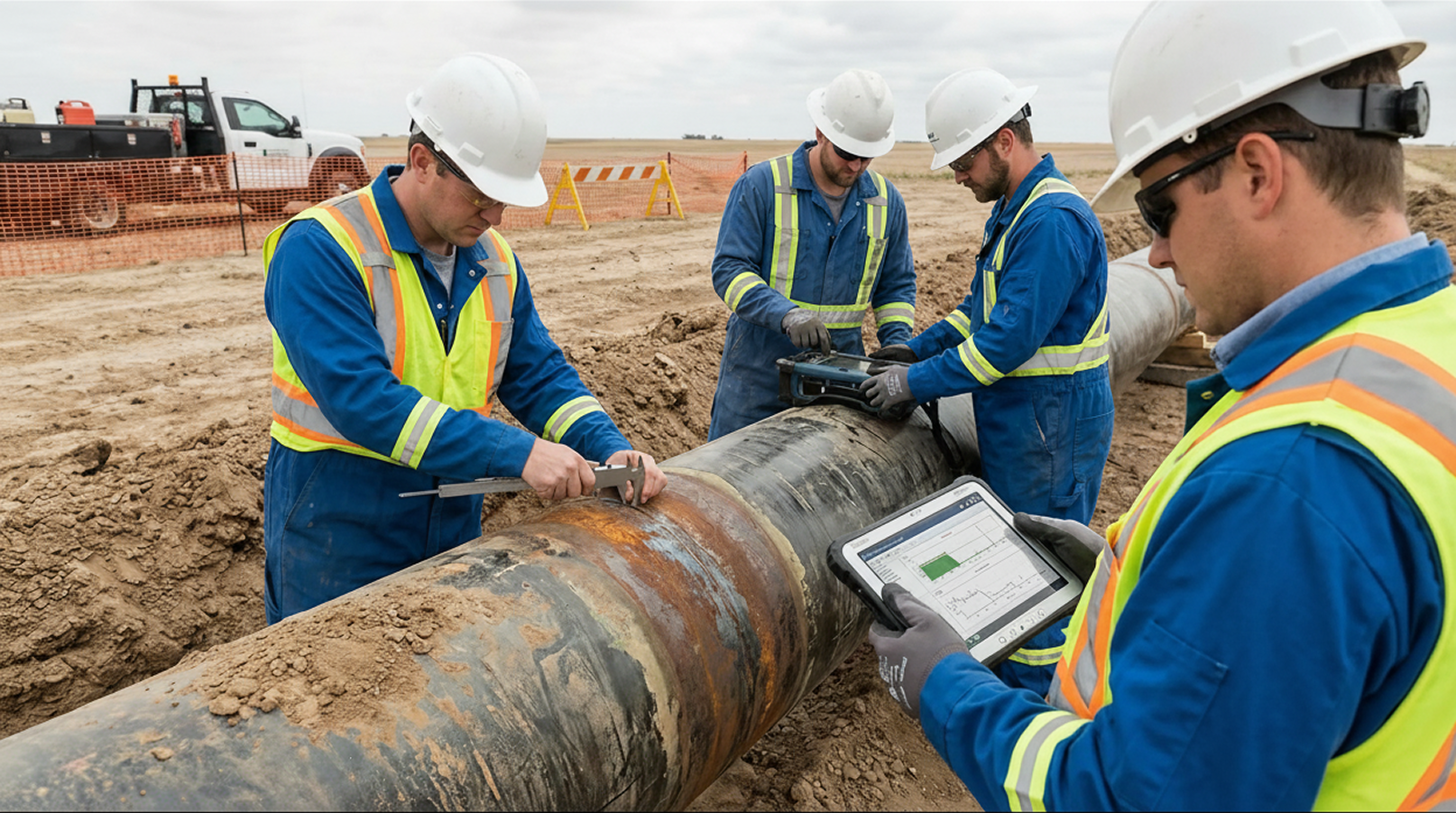
- Built a digital system for field crews to input actual in-trench measurements.
Results
- Screened and processed over 90 percent of incoming corrosion indications.
- Significant reduction in engineering hours required for manual defect reviews.
- Enabled real-time recalibration of inspection intervals using field measurements.
- Optimized the physical repair budget by focusing on high-risk anomalies.


.svg)
.svg)
.svg)
